



GroundTruth Blog

Marcia Ishii-Eiteman's blog

Marcia Ishii-Eiteman's picture

Climate change, environment and agriculture are inextricably linked. Many would have us believe that protecting the environment means feeding fewer people. Can we somehow feed the world and save rare and endangered species from extinction?

A scientific review published this month by my colleague, Michael Jahi Chappell and his co-author, Liliana Lavalle, tackles just this question. Asking “Food security and biodiversity: can we have both?” Chappell and Lavalle say yes. Citing the UN-led International Assessment of Agricultural Knowledge, Science and Technology for Development (IAASTD), among other studies, the authors explain how agroecological farming not only can feed the world, but also can enhance biodiversity.

Marcia Ishii-Eiteman's picture

Two weeks ago I wrote about genetic trespass. This week it’s chemical trespass. Monsanto makes news again.

An international team of highly respected scientists has just released a stunning report, Roundup and Birth Defects, proving that Monsanto and industry regulators have known for decades that Monsanto’s top-selling weedkiller, Roundup, causes birth defects in laboratory animals.

Marcia Ishii-Eiteman's picture

Farmers, Indigenous people and rural communities around the world celebrated the International Day for Biological Diversity last week. But casting a long shadow was the news that big funders and new NGOs are teaming up with the pesticide-biotech giant, Syngenta, in a renewed effort to push genetically engineered rice forward in Bangladesh and the Philippines.

Nicknamed “golden rice,” this untested, highly controversial GE crop threatens biodiversity across the region and risks bringing economic and ecological disaster to Asia’s farms. 

Marcia Ishii-Eiteman's picture

My mom hackles are up. GE toxins are turning up in umbilical cordblood and the blood of pregnant women, according to a study by independent Canadian doctors. And what might be the effect of these toxins on developing fetuses? No one really knows. Let me tell you why this is big news.

All this time, Monsanto has based its assertion that crops engineered to contain the bacterial toxin, Bacillus thuringiensis (Bt), are harmless on an assumption that the toxin breaks down in the digestive system and so never enters the rest of the body. Regulators have been repeating this to us for over a generation. Now it turns out that the Bt toxin is not only surviving in our guts, but is making its way on into our bloodstreams — and if we’re pregnant, into the soon-to-be-babies in our bellies.

Marcia Ishii-Eiteman's picture

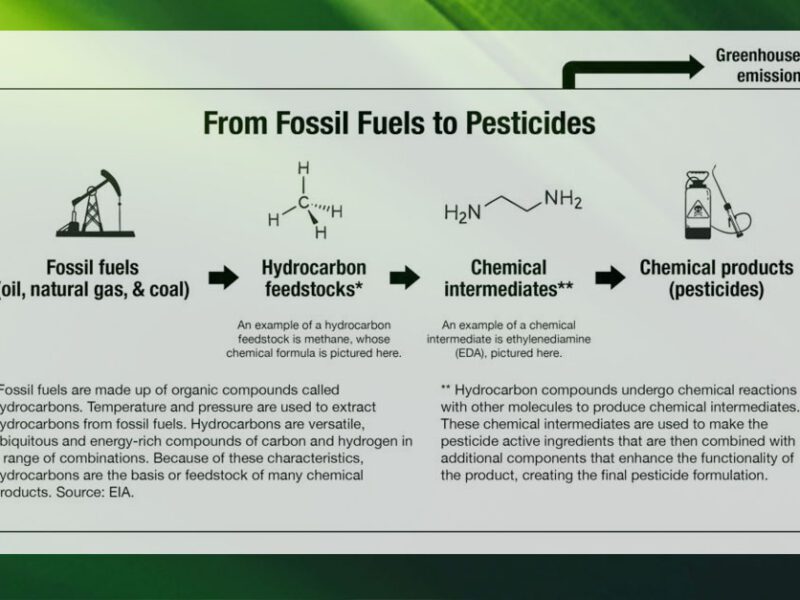
With gas prices well over $4/gallon, conversation with my neighbors frequently turns to the vulnerability of our fossil-fuel-based economy and to the future of our planet. The good news I can share today is that organic farms — besides being good for the soil, environment and our health — are proving to be much more energy efficient than conventional systems.