Take pesticides off Mom's worry list

Take pesticides off Mom's worry list

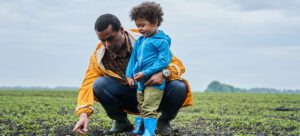
Support PAN's work to protect kids, families and communities from pesticide harms. Help ease this worry for moms everywhere. Donate today »

EPA, step up for bees!

EPA, step up for bees!

The European Union just voted to stop using bee-harming pesticides. Tell EPA it's time to follow the science and protect bees.
Take Action»

Debunking GE myths

Debunking GE myths

Dr. Marcia Ishii-Eiteman separates science from myth about genetically engineered crops. Read More »

What's on your food?

What's on your food?

The science is in — pesticide residues are on our food, even after washing. Which foods and how much? Our iPhone app puts these answers at your fingertips.
Download it for free»

Kristin Schafer's picture

When a child’s health is on the line, moms will often stand up in truly courageous ways. Like the mothers in the small, rural community of Lindsay, California who were concerned about how pesticides were affecting their children.

These central valley moms enrolled in a project back in 2006 to monitor how much chlorpyrifos — a commonly used insecticide — was drifting into their homes from nearby fields and orchards, using a simple “Drift Catcher” tool. They also signed up for biomonitoring, a way to find out how much of that pesticide was then making it into their bodies, and likely also into the bodies of their children.

Kathryn Gilje's picture

A critical and devastating new study confirms a link between certain work — farming and vegetable canning included — and an elevated risk of breast cancer. The research was conducted in southern Ontario, and for me, this news hits close to home.

I was raised in Minnesota, and lived on a small farm just fifteen miles from a vegetable canning factory. When reading this study, I immediately thought of Lily, a young woman diagnosed with breast cancer in her late twenties. She and her mother Lidia spent over a decade working in the vegetable canning factory after coming to Minnesota as migrant farmworkers. I vividly remember the desperation and grief in Lidia's voice when she told me the news of Lily's cancer.

Pesticide Action Network's picture

In a new report and policy statement released yesterday, the American Academy of Pediatrics (AAP) highlighted the harmful effects of pesticides on children, and urged government action.

AAP points to the growing body of scientific evidence linking pesticide exposure to children's health harms, focusing in on harms to the developing nervous system and increased risk of some childhood cancers. The pediatrician group’s findings and recommendations are similar to those highlighted by PAN's A Generation in Jeopardy report released last month.

Marcia Ishii-Eiteman's picture

Over last week’s Thanksgiving holiday, many Americans will have paused to savor the blessings of health, family and community. Some of us will have binged on too much turkey and consumption-crazed Black Friday sales. But for the world’s biggest pesticide and seed biotech companies, the entire year has been one long feeding frenzy. This frenzy culminated in recent months in a multi-billion dollar spending spree in which, reports Bloomberg, three of the "Big 6" pesticide companies (Syngenta, Bayer and BASF) together shelled out over two billion dollars to acquire biopesticide and other “green product” companies.  

Concerns over corporate "greenwashing" notwithstanding, the larger issue here is a new frontier of market-making and corporate consolidation from the people who brought us "DDT is good for me" commercials. 

Margaret Reeves's picture

EPA recently reviewed the links between mothers’ exposure to pesticides during pregnancy and children's health outcomes, highlighting recent findings in its online newsletter Science Matters. The article, entitled "Mothers Matter: Looking for a Healthy Start," presents the latest science linking prenatal exposure with reduced birth weight and disrupted brain and nervous system development, among other health harms.

It’s very good that EPA is explicitly communicating science, with the implicit intent to change policy. What’s still missing is pesticide use policies that are adequately protective of children’s health. We're hopeful this could be changing.