Help us win a global lindane ban - with your story!

Protect California Farmers!

Help convince the U.S. to support a global lindane ban - with your story. FDA officials need to know how parents have been controlling lice safely without lindane.

Parents around the country know there are ways to control lice without relying on dangerous chemicals like the pesticide lindane.

In California, lice shampoo containing lindane have been outlawed since 2001. Below, parents from California and beyond share their stories of lindane-free lice control. These stories will be shared with decisionmakers in Michigan, where a law similar to California's ban is now being considered. They will also be delivered to the Food and Drug Administration and State Department. Officials there are finalizing the US stance at an upcoming global meeting where governments will be deciding whether to ban lindane worldwide.

Your experience with lindane-free lice control will help convince these decisionmakers to do the right thing - please tell us your story today.


Stories from California parents


I discovered lice in my 6-year-old daughter's hair one night. We were shocked, ashamed and panicked. We have since learned that there is nothing to be shocked, ashamed or panicked about. Lice are a common occurrence in children that has no regard for social status or hygiene.

In our panic, we tried a drug store treatment with lindane but the lice persevered. Then an advice nurse told me about a non-pesticide treatment that her medical group had found to work even when the chemical versions don't. I was all for it, because we were resolved we would never expose our child to pesticide on purpose again.

The remedy used 1 cup of olive oil, ¼ cup of shampoo, a tsp of tea tree oil and a ¼ - ½ tsp of either lavender or rosemary oil. We glopped the mixture on her head so that it covered entire scalp and all the hair. We then wrapped her head in plastic wrap and let her watch TV for ½ hour. After washing it several times we picked out nits with a fine-toothed nit comb. We used the comb several times parting the hair carefully into little sections until we stopped finding evidence. Now we are always careful to braid her long hair when there is an outbreak at school. If we think she has been exposed, we wash her hair immediately with shampoo and tea tree oil. Lice only lay eggs at night so if you remove them before they reproduce you win.

- Molly C., Mountain View

My daughter is now in the third grade in Oakland, CA where it seems that lice infestations occur routinely one to three times a year in virtually all daycare centers and elementary schools. She has a lot of long, thick hair. The presence of lice in your child’s hair is merely a nuisance; lice are generally not a health threat. There is no reason to treat them by putting poisonous compounds on your child’s head. I have never used harsh chemicals. I do nothing other than methodical, thorough combing every four days for a couple of weeks.

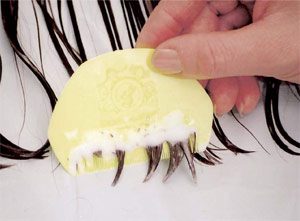
My daughter sits in the tub, I use regular shampoo and plenty of conditioner, rinse the conditioner mostly out before combing, comb out tangles with a regular comb then methodically comb using a lice comb (the plastic ones work best). I make sure I clean the comb after each pass into a container of water so I can later check for lice. Only adults move from head to head. If you comb every four days for a couple weeks to make sure that any adults and hatching nymphs have been removed, you’ll be set. I have, on occasion, used the enzyme product Lice R Gone (the first 8 oz bottle lasted more than three years). In addition to combing I wash sheets, put stuffed animals into plastic bags for a few days (adults only live for 55 hours off the body), and toss blankets in a hot dryer for a while.

- Margaret R., Oakland

When my daughter contracted head lice for the first time in preschool, I felt lucky she had a teacher who sent us home with detailed instructions on how to get rid of lice in the home as well as on our heads. We bought some natural products in the local health-food store, which did the job. In order to prevent further outbreaks I have used a homemade spray with essential oils of tea tree, rosemary and lavender in water on my daughter's hair every day during lice-season. She is now 8 and hasn't had an episode since.

- Frans W., San Anselmo

There are PLENTY of natural resources to get rid of lice, including tea tree oil. Internet research has many suggestions. Both my children, our 3 dogs and cats and I got lice from my daughter’s daycare (and cross contamination). We all washed with a shampoo that contained almond oil, tea tree oil and lavender and they went away!! Imagine that...WITHOUT chemicals.

- Drayton K., Grass Valley

Right after my son started pre-k at his new private school, we got notice there was a lice outbreak. What a way to start the school year! The school was quick to act and bring the situation under control without lindane, using only natural products applied by a local company. The school also urged parents to take precautionary and remediative actions using the special comb and those natural products to maintain the health of our children and the environment, and to avoid re-occurrence of super bug lice.

As a preventative measure, I carefully checked my son's hair and dabbed the hairline with drops undiluted tea tree oil to keep the lice at bay. In addition, the school checks every child, class by class, with a fine-toothed comb at each return from school break/vacations. These efforts have paid off: no more lice outbreak and no nasty smell and side effects of poisoning our little ones with lindane.

- Lisane D., San Carlos

By the time I figured out we had lice; all three of my kids were infested. I keep a clean house and clean kids, so I was surprised, although I do understand now that lice don't mind clean heads! We used Lice MD, a silicon lubricant, as I am extremely leery of using pesticides – especially on my children's heads, right over their growing brains.

I washed everything that was on the beds, thoroughly vacuumed the couch, and did extensive comb-outs on each child's hair. I have two girls with long thick hair, so the comb-out was a big deal on them. The lubricant in Lice MD made it much easier than it would have been with a traditional lice shampoo.

Now, lice free, it was worth it. I have a friend who used olive oil, soaked in the hair for 30min every other day for two weeks. This works as well.

- Carolyn C., Elk Grove

I heard about Lindane when I had my first son, Diego. The more I learned about it, the more resolved I was to avoid putting poison directly into the skin, hair, eyes and mucous membranes of my darling baby. I have never used lindane shampoos; Diego is now 13, he has a younger brother, and our family has been through quite a number of rounds of lice infestations.

This is what works: enzyme shampoos (check out Safe Solutions Lice R Gone, www.safesolutionsinc.com). It costs $22/bottle, and you have to leave it on for ten minutes, but it works! I'm willing to pay that price for a healthy product that ends lice quick, and spares my child damaging pesticide poisoning. There are other enzyme foams, sprays and shampoos, and they all work. You still have to comb the lice out, but that was a given anyway. Iron couches and upholstery to kill nits. Wash all clothes, bedding and towels. Minimize head contact for two weeks. Quarantine affected kids until the nits are gone. This can be as little as one day, if you get it fast. Tea tree oil shampoos can help, and essential oils like lavender and eucalyptus, but when you need the heavy guns, go for the enzyme stuff.

- Nancy B., San Diego

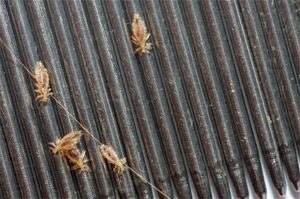
Enzymes work! There are some great enzyme products available that dissolve the exoskeletons of the lice. They desiccate and die. Comb to remove lice eggs and repeat again if needed. I have recommended this to friends and they always thank me.
I would never put lindane on my child and advocate that it should be banned completely. It is criminal that doctors are still prescribing it when there are safe alternatives that are effective. I learned about the enzyme products at: http://safe2use.com/

- Julie O., Sacramento

We have never had lice in our family, but twice I contracted scabies when I worked in a convalescent hospital. This was in the 1980’s, and I was very concerned about having to use lindane lotion, which contains a chlorinated hydrocarbon, a dangerous chemical in the same class as DDT. Of course, everyone in the household had to use the toxic lotion.

- Marilee A., El Cajon

The times that I needed to deal with lice on my son when he was growing up I used a Pyrethrin OTC formula. These are natural insecticides produced by certain species of the chrysanthemum plant. This is much safer, and an effective alternative to Kwell (lindane).

- Kathleen W., Forestville


Stories from parents around the country


I spoke with a Cordova public health nurse, yesterday who spoke to me at length about the lice treatments that she has employed in Cordova and Yakutat.  She told me that stores in the small towns that she serves do not always stock OTC headlice shampoos because lice outbreaks are infrequent.  But a few years ago, there was a widespread outbreak of lice in Yakutat and the stores would not have been able to get the headlice shampoos for a month.  She came to Yakutat and hosted "nit-picking parties" where people would apply olive oil to their scalps and leave it on for a while.  Then, they would rinse the olive oil out with a 1:3 mixture of vinegar and water which would help to free the lice from the hair follicles.  People also picked nits out of each other's hair.  In ten days, they repeated this treatment and also sealed their exposed clothes and sheets in plastic bags for one month.  I was glad to hear about the use of an alternative treatment to head lice by a public health nurse.

- Sara H., Anchorage, AK


I've always been concerned about the use of pesticides and their impact on our health and the environment. So when my children got infested with lice at summer camp, I knew I did not want to douse them with any pesticide especially one with the health and environmental risks of lindane. I turned to the experts to decide on an alternative method of treatment and this is my story:

Everywhere I looked combing with a fine-tooth comb was recommended, and not only as an alternative to pesticide use but also as an addition to the use of lindane and other pesticides in order to remove nits. I decided to try combing alone to see what my results would be. I found the comb easily at my local pharmacy and, to make a long story short, it worked beautifully. Both of my children were lice free in a week.

Was it easy? No. It took time and care to do it correctly, but like most children they were happy to sit in front of the TV while I combed. I also made sure to continue to check them even after the comb confirmed that no lice were present. For effective treatment with pesticides you have to do the same thing.

I'm happy I took out the toxic middleman and used a proven safe and effective method instead. I recommend the same thing now to anyone who will listen.

- Ruth K., Chicago, IL

A number of years ago, my teenage daughter contracted head lice from sharing costumes in a school play. I had helped create graphics for the authors of a book called "Head Lice to Dead Lice," so I knew about the dangers of lindane. Finally I had the opportunity to try getting rid of lice with olive oil and a nit comb. I followed the instructions in the book, and my daughter was completely rid of the lice in a couple of days. And she had more beautiful, shiny hair too from the olive oil treatments!

- Glenna L., Cambridge, MA

I've successfully gotten rid of lice after researching a company that uses neem oil. That worked splendidly. When I had used traditional lice-killer from a food store, I got really sick with the fumes out gassing and burning my scalp and making my eyes water. I will never ever again use any toxic now that I know there are natural oils that lice hate.

- RaVen S., Portland, OR

Tea Tree oil works.

- Aaron M., Madison, WI

I used an herb called Tansy, which grows in my garden, together with a fine-toothed comb. I have always tried to stay away from using chemicals in caring for my children and my home -- and we are all really healthy!

- Elisabeth K., Woolwich, ME

I use olive oil.

- Roxie S., Holmen, WI

After battling with lice - anybody who has children will - and knowing that pesticide based shampoos were a bad idea for young children, I believe I have found the solution.

We have tried everything including application of rosemary and tea tree oils, conditioner, olive oil and of course lots and lots of lice picking along with that.

Listening to a local radio station we heard about a product called a Robi comb. This comb has a battery in it and when a louse or nit comes into contact with the prongs it is zapped, electrocuted, end of story. Obviously one has to be aware of the life cycle of lice in order to complete treatment, but now that products like Robi comb are out there there’s no need whatsoever to use chemicals on the heads of children. Oh, yes, one more thing: I don’t have a share or any interest in the Robi comb business, even though I wish I had invented the thing!

It’s time to ban lindane.

- Glenn A., Noordhoek, Cape Town

I use miracle whip.

- Rox F., Harmony, ME

Our neighbors hail from Europe where they use mayonnaise applied to the hair. It is completely harmless to the kid but a bit messy. Kids however tend to enjoy the experience. Three applications and lice are history.

- James K., Cambridge, MA

I treated my daughter with the regular lice shampoo but it didn't work so I used a combination of eucalyptus oil, pennyroyal oil and tea-tree oil. I rubbed the oil on her scalp, and then picked out the nits everyday. I kept the oil on her scalp, and it repelled the lice.

- Amy B., Corvallis, OR

In the 1990's I worked to get Missoula County MT's Health Board to communicate with the Co. district about the risks of lindane. While the school district had some preventative pyrethroid alternatives in place, the Health Board's letter and personal communications, highlighting the risks of lindane, made a bit more progress.

- Tony T., Eastpointe, MI

We've used Nit-Free Mousse and it works. Why would we put toxic chemicals on our skin when it isn't necessary? Insects are made up of a high concentration of protein. When Nit Free Mousse is introduced to the lice insect, the enzymes act and cause the insect to molt (shed its outer coating) prematurely.

Poison pesticides attack the nervous system of the insect, which is not always effective. University research has noted that some insects have developed a resistance to poison products! Active ingredients: A specially formulated broad spectrum of natural enzymes (protease, amylase, cellulase, lipase) derived from innocuous yeast strains. FDA food grade ingredients. GRAS (FDA Generally Regarded As Safe) List Parts 184 and 186. This product is not a pesticide.

- Denise H., Lanai, HI

We beat lice with metal lice combs and olive oil. Really soak your child's head and leave the oil on for at least two hours. Wash out the olive oil with shampoo. Their hair will still be quite greasy. Comb out very small sections of hair, dipping the comb in cider vinegar and wiping it off on a towel each time to remove any debris. I used an old toothbrush to clean the comb as well. Do this every day if you are very paranoid, or at least every week for several weeks. I think a hatched egg has 10 days to mature and lay, so maybe do it every 10 days.  The Harvard University Medical Department has some very helpful links about treating lice and lindane exposure.

- Margret L., Sterling, NY

We have used a product from CedarCide Industries that is nontoxic and safe for children and animals. It controls almost all flying and biting insects (flies, ticks, mosquitoes, gnats, lice, scabies, etc.) safely. They have a website, check it out. Spray it on skin, clothing or soak hair and gently rub into scalp. Leave it on hair and scalp overnight wrapped in a towel. It does not have to be washed from skin but will actually make it feel quite nice. Personally I love the smell of cedar but some people do not.

We are tired of being poisoned legally with the help of our doctors.

- Merrolyn S., Milton Freewater, OR

Back to top