



Take pesticides off Mom's worry list

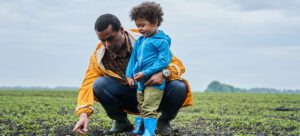
Take pesticides off Mom's worry list

Support PAN's work to protect kids, families and communities from pesticide harms. Help ease this worry for moms everywhere. Donate today »

EPA, step up for bees!

EPA, step up for bees!

The European Union just voted to stop using bee-harming pesticides. Tell EPA it's time to follow the science and protect bees.
Take Action»

Debunking GE myths

Debunking GE myths

Dr. Marcia Ishii-Eiteman separates science from myth about genetically engineered crops. Read More »

What's on your food?

What's on your food?

The science is in — pesticide residues are on our food, even after washing. Which foods and how much? Our iPhone app puts these answers at your fingertips.
Download it for free»

Pesticide Action Network's picture

Join us at the Food Security 15th Annual Conference in Oakland from November 4-8. The conference will be held at the Oakland Marriott, 1001 Broadway, Oakland, CA.

This year’s conference theme is Food Justice: Honoring our Roots, Growing the Movement. Register now for 5 exciting and inspiring days of field trips, plenary presentations, hands-on workshops, “food movies,” prize ceremonies and more. 

Kathryn Gilje's picture

Once more, science shows that pesticide exposure is linked to serious health harms, and children bear the brunt of the cost.

A recent study revealed that persistent pesticides and pollutants are related to a 450% increase in two specific birth defects across rural China: spina bifida and anencephaly.

Medha Chandra's picture

Women grow more than half of the world’s food. It's the unknown fact of global agriculture.

I have vivid memories of women working the fields across my travels in Asia, and find it amazing that when people talk about farmers, it's almost always about men. In the U.S., for instance, 30.2% of the 3.3 million farm operators counted in the 2007 census were women. In the Global South, women remain guardians of sophisticated and extensive knowledge about traditional agricultural practices that have sustained communities over centuries. The fact is that women are the ‘hidden resource’ supporting much of agriculture across the globe.

Pesticide Action Network's picture

Victims of the 1984 Bhopal pesticide plant explosion are working with British Members of Parliament, Amnesty International and others to expose and oppose sponsorship of the London 2012 Olympics by Dow Chemical Company. Dow has been denying liability for cleanup of the Bhopal site and reparations for victims and their survivors ever since it bought the plant’s former owner, Union Carbide Corporation (UCC), in 2001.

 “The company's name will be emblazoned on the £7m artwork 'wrap' around the main stadium, guaranteeing months of exposure,” according to the UK Independent. Dow and UCC are defendants in a litigation case in India for clean-up of the Bhopal pesticide factory site.

Margaret Reeves's picture

I was thrilled to participate in the recent TEDx conference, Harvesting Change, magnificently organized by Bon Appetit Management Company Foundation.

The presentations throughout the event focused on three key areas: the hidden, unconscionable treatment of farmworkers in the US system of industrial agriculture; movement building for social change; and the role of money in fomenting, or hampering, positive change.